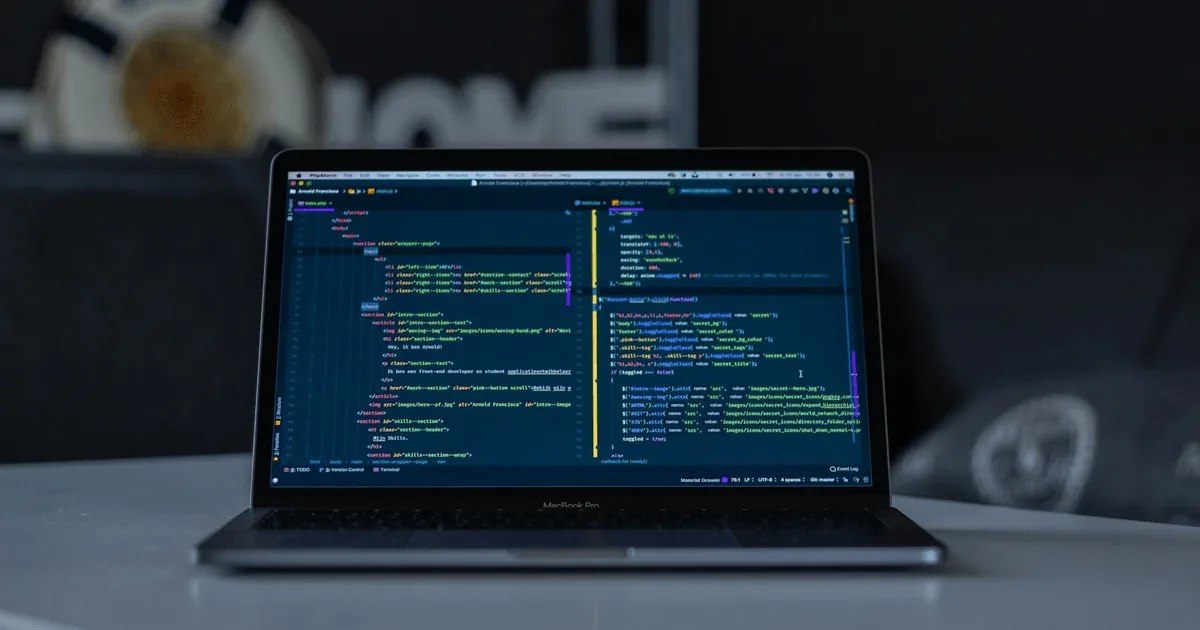
For most UK small and medium businesses, WordPress costs £3,000 to £15,000 upfront and handles 90% of use cases. W3Techs data shows it powers over 43% of all live websites. A custom-coded website (Laravel, Node.js, Next.js) starts at £15,000 and climbs past £100,000, and only makes sense when the product itself is the software — SaaS, marketplaces, fintech or heavy real-time features.
Why the Decision Hurts UK Founders
Every week a UK founder emails us the same question. They speak to two agencies. One quotes £6,000 for WordPress. The other quotes £38,000 for a custom Next.js build. The gap feels like a trick, and nobody explains it in plain English.
The truth lives in the middle. WordPress and custom code solve different problems. Picking the wrong one wastes cash, slows your launch, or locks you into a codebase you cannot scale.
The Cost of Choosing Badly
Last year a Bristol e-learning startup moved to us after burning £52,000 on a bespoke Laravel build. The actual product needed a blog, a course catalogue and Stripe checkout. WordPress with LearnDash covers that for £9,000. They paid for flexibility they never used.
The opposite also hurts. A Manchester fintech client spent 14 months stretching WordPress into a loan-origination portal. Plugin conflicts broke the booking flow every fortnight. A rebuild in Node.js saved them £3,200 a month in support fees.
What Custom Actually Means in 2026
"Custom website" sounds impressive, but the phrase covers five very different stacks. The first job is knowing which one an agency means when they quote you.
The Main Stacks UK Agencies Use
Laravel dominates the PHP side. It powers CRMs, booking portals and admin dashboards for roughly 36% of UK agencies we benchmark against. Node.js with Express or NestJS runs the real-time layer for chat apps, live dashboards and Stripe Connect marketplaces.
Next.js and Remix handle the front end where SEO matters. React alone suits internal tools where Google rankings do not. Ruby on Rails still ships fast, though UK hiring pools shrink every year.
The Boring Truth About Frameworks
None of these frameworks beat WordPress for a brochure site. They shine when the code models a unique process — loan underwriting, route optimisation, live auctions, multi-tenant dashboards. If your site is pages plus a contact form, custom code adds cost, not value.
Pro tip: Ask any agency quoting "custom" to name the framework, the database, the hosting target and who owns the code. If the answer sounds vague, the quote hides risk.
WordPress in the Real World
WordPress powers 43.4% of all websites on the internet according to W3Techs. That figure climbs every quarter. Scale brings ecosystem depth that no custom stack matches.
The Strengths That Still Win Deals
A trained marketing assistant updates pages without touching a developer. Gutenberg blocks, ACF fields and tools like Bricks Builder give non-technical teams real control. WooCommerce covers e-commerce for roughly 28% of UK online shops, from Cardiff bakeries to £4m turnover brands. UK contractor rates for WordPress developers sit around £350 to £550 per day according to IT Jobs Watch.
The plugin market also de-risks weird requirements. Need GDPR consent, Companies House lookups, Royal Mail rates or HMRC Making Tax Digital export? Someone already ships a plugin. A custom team builds those from scratch.
Where WordPress Breaks Down
Pain starts at roughly 30 active plugins. Page load slows, admin screens lag, and any Core Web Vitals work becomes a firefight. Our audits across 100+ projects show sites with more than 40 plugins average 4.2 seconds to Largest Contentful Paint, well past Google's 2.5-second threshold.
WordPress also struggles with bespoke data models. Custom post types paper over it, but anything relational — think a booking engine with overlapping resources — fights the database design. At that point a proper framework pays for itself.
I built my first WordPress theme in 2013 and shipped a #1 bestseller on ThemeForest a few years later. After 100+ production projects and 20+ custom plugins at Cambria Digital, the pattern stays the same: 8 out of 10 UK SMB briefs belong on WordPress, 2 out of 10 genuinely need custom code, and the expensive mistakes happen when founders pick on vibes, not requirements.
Five-Year Total Cost of Ownership
Upfront price hides the real cost. Over five years, hosting, support, licences and developer time swamp the original quote. UK businesses also need to keep Companies House compliance information visible on their site, which any platform must accommodate. Here are the numbers we see across our UK client base.
| Cost Line | WordPress (5 yr) | Custom Build (5 yr) |
|---|---|---|
| Initial build | £3,000 – £15,000 | £15,000 – £100,000+ |
| Hosting | £360 – £1,800 | £1,800 – £9,000 |
| Plugin / licence fees | £500 – £2,500 | £0 – £600 |
| Maintenance retainers | £1,800 – £6,000 | £6,000 – £30,000 |
| Feature additions | £2,000 – £8,000 | £8,000 – £40,000 |
| 5-year total | £7,660 – £33,300 | £30,800 – £179,600 |
Reading the Table Without Panic
The WordPress floor covers a Cardiff consultancy with 12 pages, a blog and a contact form. The ceiling suits a regional retailer running WooCommerce with 1,500 SKUs. Anything above that moves into custom territory anyway.
On the custom side, the £30,800 line reflects a tightly scoped Next.js marketing site. The £179,600 ceiling matches a true SaaS MVP with admin dashboards, Stripe billing and a mobile app. For a deeper price walk-through see our guide on how much a website costs in the UK.
Hiring Developers in the UK
Your build choice locks you into a hiring market. Getting this wrong makes future changes expensive long after launch.

WordPress Talent Pool and Rates
WordPress developers earn £32,000 to £55,000 in UK SMB roles, based on 2025 listings across Find a Job and Indeed UK. Freelancers charge £35 to £85 per hour. Supply sits well above demand in every major city.
You find a replacement in days, not months. That matters when a lead developer leaves.
Full-Stack Custom Developer Market
Mid-level Laravel or Node.js engineers command £55,000 to £80,000. Senior Next.js contractors bill £450 to £750 per day inside IR35. Demand outstrips supply, especially in Cardiff, Bristol and Edinburgh. Replacing a senior full-stack hire averages 11 weeks in our experience.
For a startup-focused angle, our breakdown of React vs WordPress for Cardiff startups covers the hiring math in more detail.
Security, Scale and Maintenance
Both platforms stay secure when someone cares. Both collapse when nobody does. The difference is how the work looks.
How WordPress Stays Safe
Patchstack's 2025 vulnerability report shows 96% of WordPress breaches trace to out-of-date plugins, not core software. Monthly updates, a managed host like Kinsta or SiteGround, two-factor admin logins and a Web Application Firewall drop incident rates close to zero. Budget £40 to £150 per month for this.
How Custom Code Stays Safe
Custom apps avoid plugin attacks entirely but introduce framework-level risk. OWASP Top 10 issues — injection, broken access control, misconfigured CORS — land in code that no community patches for you. Expect 8 to 20 developer hours per quarter for dependency updates, pen tests and log review.
Scalability Without the Marketing Talk
A well-tuned WordPress site on a £60 VPS handles 100,000 monthly visits. Cloudflare, object caching and a sensible theme push that past 500,000. Beyond a million pageviews per month, custom architecture wins on cost per request, especially with edge rendering.
When a Headless Hybrid Wins
Headless WordPress uses the CMS for content authoring but serves pages through Next.js, Astro or a similar front end via the REST API or WPGraphQL. You get Gutenberg for editors and framework speed for visitors.

The Sweet Spot for Hybrid
Publishers, SaaS marketing sites and large content libraries benefit most. A Welsh media client of ours moved 3,200 articles to headless WordPress plus Next.js and cut LCP from 4.1 to 0.9 seconds. Editorial workflows stayed identical.
When Hybrid Adds Pain You Do Not Need
Small sites pay double. You maintain two codebases, two deployments and two sets of dependencies. Under 20 pages, skip it. Our web development team walks clients through this filter on every discovery call.
The Decision Framework
Forget brand loyalty. Answer these four questions honestly.
Four Questions That Decide It
First, who edits content most weeks? If the answer is a marketing coordinator, WordPress wins. Second, does your product model a unique process? If yes, custom code earns its cost. Third, what is your realistic five-year budget? Under £30,000 pushes WordPress. Fourth, how critical is sub-1-second load on mobile? If revenue depends on it, plan for headless or full custom.
A Simple Scoring Approach
Give each question 1 point for WordPress and 1 point for custom. Three or more WordPress points means stop there. Three or more custom points means budget properly and hire accordingly. A tied score usually points to headless.
Common Mistakes to Avoid
- Choosing custom because it sounds premium — premium means fit for purpose, not expensive.
- Stacking 40+ WordPress plugins instead of hiring a developer to write 200 lines of custom code.
- Skipping the maintenance retainer — both platforms rot without monthly care.
- Ignoring hiring risk — picking a rare framework leaves you stuck when your developer leaves.
- Believing one agency's religion — a good partner quotes the right tool, not their favourite tool.
- Underbudgeting the 5-year TCO and panicking in year two when support costs arrive.
- Forgetting GDPR and Companies House data obligations — both platforms need the same compliance work. See our notes on the hidden cost of cheap web design.
7 Frequently Asked Questions
Not automatically. A lean WordPress install on quality UK hosting scores 90+ on Google PageSpeed Insights. Speed problems come from bloated themes, heavy page builders and plugin overload, not WordPress itself. Custom Next.js sites edge ahead on pure Core Web Vitals, but the gap shrinks to 100 to 300 milliseconds when both are built properly. For a Cardiff coffee shop or a Swansea law firm, visitors will not notice the difference. For an e-commerce brand chasing every conversion point, the custom advantage starts to matter around 100,000 monthly sessions.
Yes, and many UK brands follow exactly that path. Start on WordPress while you validate the business, then rebuild on Laravel, Node.js or Next.js once traffic, revenue and feature complexity justify it. Migration costs £8,000 to £35,000 depending on content volume, URL mapping and data models. Plan 301 redirects from day one, export content through the WordPress REST API, and run both sites in parallel for two weeks. Skipping the validation phase is the real risk — building custom first often wastes money on features nobody uses.
Both rank equally when built well. Google's John Mueller confirmed this publicly. WordPress ships with clean URLs, XML sitemaps and schema through plugins like Rank Math. Custom builds need a developer to add every SEO feature by hand, which raises cost but allows deeper control. For most UK service businesses, WordPress reaches page one faster because the SEO basics come for free. Custom code pulls ahead only when you need programmatic SEO at scale — thousands of location pages, real-time data feeds, or complex internal linking logic that a plugin cannot model.
You should, and the contract must say so in writing. Reputable UK agencies transfer full IP ownership and hand over the Git repository on final payment. Watch for clauses that license the code back to the agency or lock you into their hosting. WordPress ownership is cleaner by default because the core software sits under the GPL licence, but your custom theme, plugins and content still belong to you. Before signing any quote, ask who owns the code, where the repository lives and how handover works if you ever switch agencies.
A WordPress site launches in 4 to 8 weeks for most UK SMBs. Complex WooCommerce stores with bespoke shipping and ERP integration stretch to 10 or 12 weeks. Custom builds run 12 to 24 weeks for a focused MVP and 6 to 12 months for a full SaaS product. The gap comes from discovery, design systems, database modelling and QA. If your deadline is a trade show, funding round or seasonal campaign, WordPress usually meets it. Custom code rewards patience and penalises rushed timelines with technical debt that costs more to fix than the saving delivered.
Yes, when managed properly. UK accountants, solicitors and healthcare providers run WordPress sites safely, though Cyber Essentials and ICO audits judge the whole organisation, not the website alone. The recipe stays simple: managed hosting, automatic plugin updates, two-factor authentication, daily off-site backups and a Web Application Firewall. Avoid nulled themes, keep the plugin count under 25, and rotate admin passwords quarterly. For data classified as special category under UK GDPR, add a vetted hosting provider with ISO 27001. Custom code is not automatically safer — it just moves the responsibility from a plugin author to your own developer.
AI code assistants lower the cost of custom builds by roughly 20 to 30% on greenfield projects. That shifts the break-even point but does not erase it. WordPress still wins on content editing, hiring depth and plugin ecosystems. Custom code still wins on unique business logic. The bigger 2026 shift sits on the content side — AI search engines like Perplexity and Google AI Overviews cite well-structured pages regardless of the underlying platform. Focus budget on real UK expertise, clear schema and fast load times, not on picking a stack your competitors admire.
Still stuck between WordPress and custom code? At Cambria Digital we run a free 30-minute discovery call, look at your actual requirements, and tell you which route fits — even when the honest answer is the cheaper one. Book your free discovery call and get a clear plan before you spend a penny on development.