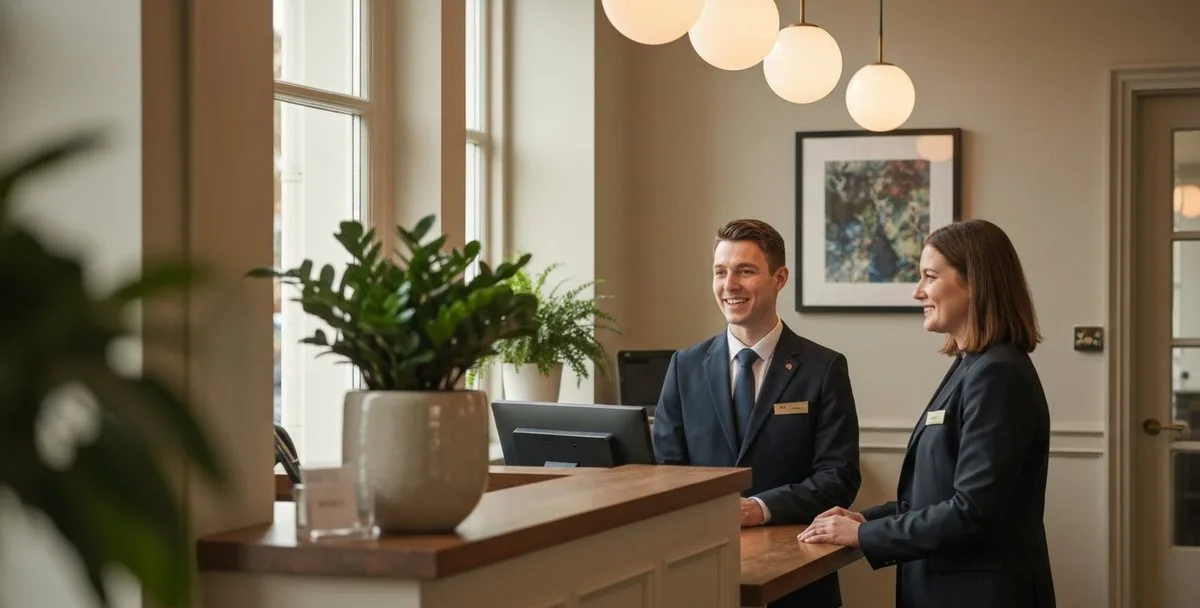
A hotel website that just looks nice is a missed opportunity. The real purpose is direct bookings — converting searchers who found you on Booking.com or Google into guests who book straight through your site, cutting out the 15–25% OTA commission you would otherwise pay. This guide covers what a UK hotel website needs to do that well, what it costs, and the design choices that make the difference.
- Since 2017
- 100+ websites delivered
- 12+ years combined experience
- #1 rated Cardiff web agency
Why Your Hotel Needs a Direct Booking Website
The OTA commission problem
Booking.com charges a standard commission of 15% on room rates, rising to 25% or more for preferred placement in search results. Expedia operates on a similar structure. These are not small fees — they are a significant slice of every room night you sell through those platforms.
Consider a 20-room hotel running at 70% occupancy with an average nightly rate of £100. That is approximately £511,000 in annual room revenue. If 60% of bookings come through OTAs at an average 20% commission, the hotel pays roughly £61,320 per year directly to Booking.com and Expedia. That figure funds multiple full salaries, a marketing budget, or a complete website rebuild several times over.
A direct booking website, combined with an email list, Google Hotel Ads, and a compelling direct booking incentive such as free breakfast or guaranteed late checkout, can realistically shift 15–20% of bookings from OTA to direct. For the example above, that is £9,000–£12,000 per year recovered. For many independent UK hotels, the website pays for itself within the first year.
How guests actually find hotels online
The typical booking journey for a UK leisure traveller goes something like this: search on Google for hotels in a location, see Google Hotel Ads results and OTA listings, click through to Booking.com or Expedia to build a shortlist, open the shortlisted hotel's own website to check photos, reviews, and what the property actually looks like, and then book — either back on Booking.com out of habit, or directly through the hotel's site if the experience is fast, trustworthy, and offers something extra.
Your website sits in the consideration phase of almost every booking, even those that ultimately go through an OTA. A slow, generic, or confusing hotel website does not just cost you direct bookings — it actively pushes undecided guests back to the OTA listing. The quality of your website affects conversion on every channel, not just your own.
What a UK Hotel Website Must Include
The direct booking engine
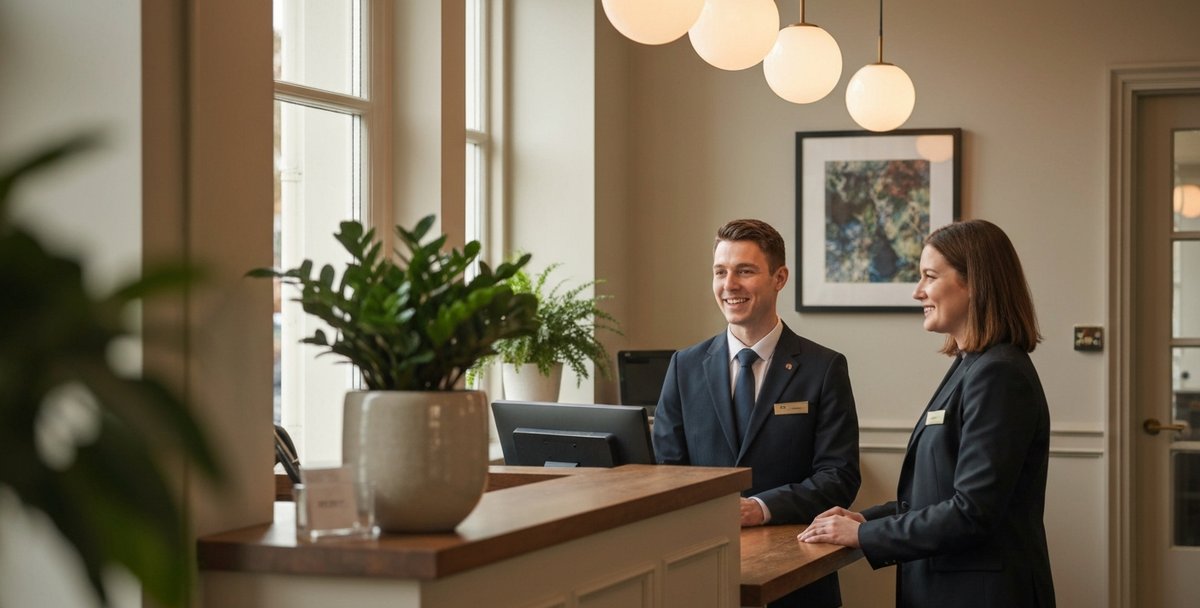
A booking engine is not optional — it is the entire point of the website. More than 60% of hotel searches start on mobile, so the booking flow must work on a small screen without pinching or scrolling sideways. Date pickers, room selectors, and payment fields need to be thumb-accessible and fast.
The most commonly integrated booking engines in UK independent hotels include SiteMinder, Little Hotelier, Clock PMS, and Guestline. A custom Stripe-based flow works well for smaller properties with simpler inventory. The key question to ask any web developer before engaging them: have you integrated with our specific booking engine and channel manager before? If they cannot answer that clearly, keep looking.
On rate parity: most OTA contracts include a rate parity clause that prevents you from advertising a lower price on your own site than the rate shown on Booking.com. However, nearly all OTA contracts permit value-adds for direct bookers — free parking, free breakfast, flexible cancellation, room upgrades — that make direct booking attractive without touching the published rate. A well-designed direct booking page leads with these advantages rather than trying to undercut the OTA price.
A channel manager is essential if you list on more than one OTA. Without it, a room sold on Expedia at the same moment someone books it direct through your website creates a double booking. Your website developer must understand which channel manager you use and confirm compatibility before any work begins.
GDPR and guest data handling
Hotels collect a wide range of personal data: names, email addresses, phone numbers, dietary requirements, accessibility needs, payment card details, and a history of each guest's stays. Under UK GDPR (which the UK retained post-Brexit as the UK GDPR, governed by the ICO), all of this requires proper handling.
The ICO requires a clear privacy notice accessible from your website explaining what data you collect, the legal basis for collecting it, how long you retain records, who you share data with (including OTA platforms and your PMS provider), and guests' rights to access, correct, or delete their data. Marketing emails sent to past guests require separate explicit consent under UK PECR unless they relate directly to a service similar to the one the guest booked — the soft opt-in rule. A booking confirmation email that includes a marketing offer without consent is an ICO risk.
The ICO publishes specific guidance for the hospitality sector at ico.org.uk. A generic privacy policy template is not sufficient for a hotel — the data you collect is too varied and the regulatory expectations are specific.
Google Hotel Ads integration
Google Hotel Ads (part of Google's Hotel Search product) displays live room rates and availability directly in Google Search results and Google Maps when someone searches for hotels in a location. This is a separate advertising product from standard Google Search Ads — it requires a Hotel Center account linked to a live booking engine feed via a compatible channel manager.
Without Google Hotel Ads, your property does not appear in the rates panel that dominates Google results for location-based hotel searches. OTAs — Booking.com, Expedia, Hotels.com — all participate in Hotel Ads and dominate these results. A hotel with a good website but no Hotel Ads feed is invisible to guests who are already searching for a place to stay. Google's Hotel Center documentation is at support.google.com/hotelads.
Visual content requirements
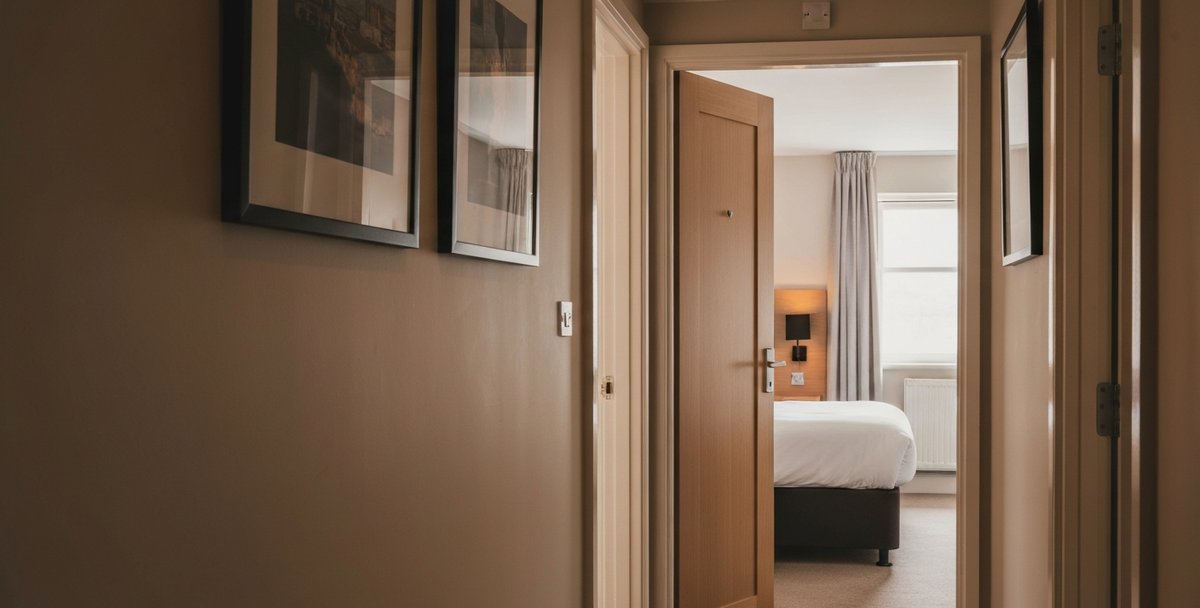
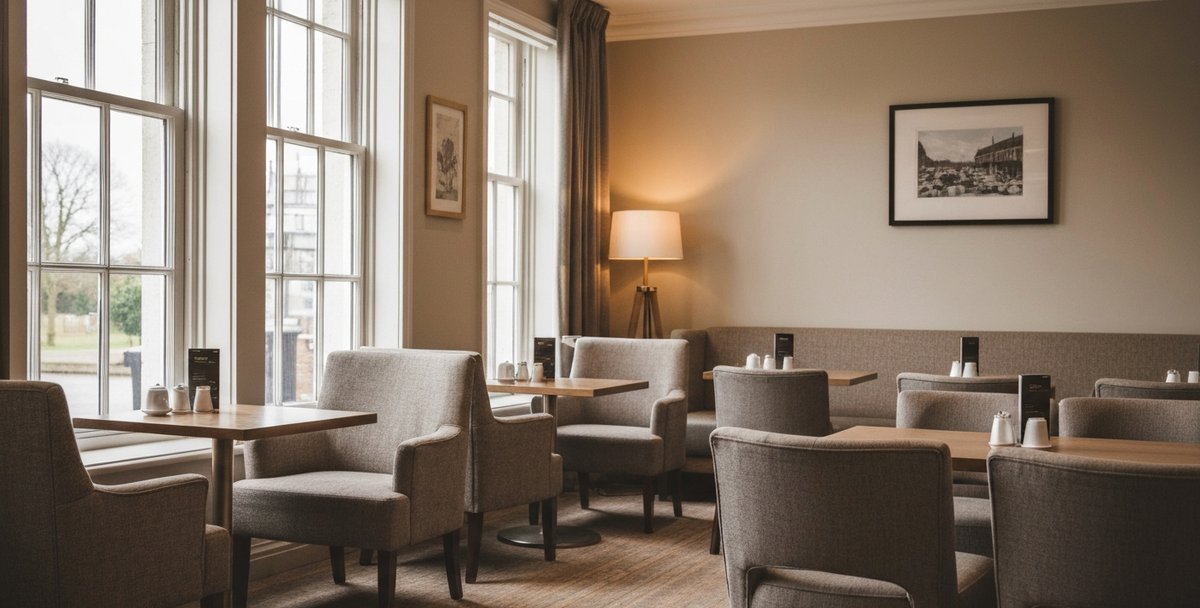
Google data shows hotel listings with 20 or more photos receive 150% more engagement than those with fewer than 10. Your website needs high-resolution photos of every room type, the lobby, any restaurant or bar, the exterior, and the surrounding local area. Virtual tours and video headers are increasingly common for mid-range and boutique properties — include them if you have invested in this content.
Every photo on the website needs descriptive ALT text, both for accessibility under WCAG 2.1 AA and for Google image indexing. A file called DSC00472.jpg with no ALT text contributes nothing to search visibility and fails accessibility standards.
From Our Experience
We worked with a boutique hotel in South Wales that was losing 22% of all revenue to OTA commission. After building a direct booking-focused website with a clear "Book Direct" value proposition — free late checkout and a welcome drink — they shifted 18% of bookings to direct within 6 months, recovering approximately £26,000 per year. The website paid for itself in month four.
Direct Bookings vs OTA Commission: The Real Maths
For a hotel selling 200 room nights per month, shifting just 30% of those from OTA to direct at 20% average commission returns £1,200/month — £14,400/year — to the business. That assumes no change in occupancy or rate. The gain comes entirely from removing the commission layer.
Rate parity and how to work around it
Rate parity clauses in OTA contracts prevent hotels from listing a lower price on their own website than the rate shown on the OTA. Breaking this can result in de-listing — the hotel disappears from Booking.com search results. It is worth reading your contracts carefully before doing anything that looks like price undercutting.
However, most OTA contracts permit what are called closed user group rates — lower prices available only to guests who are logged in, subscribed to a newsletter, or enrolled in a loyalty programme. This is a legitimate mechanism for rewarding direct relationships. Even more straightforward are value-adds: free parking, free breakfast, guaranteed late checkout, complimentary room upgrade subject to availability. These cost the hotel a fraction of a 20% commission and are permitted under virtually every OTA contract. Check your contracts annually — some smaller OTAs have dropped rate parity clauses entirely, which changes your options considerably.
Design Elements That Drive Direct Bookings
The "Book Direct" value proposition
A guest who finds your hotel on Booking.com and then visits your own website is already considering you. The job of your homepage is to give them a reason to complete the booking here rather than heading back to the OTA. A dedicated "Book Direct Benefits" section — positioned above the booking widget, not buried in a footer — that lists specific perks (free parking valued at £10/day, flexible cancellation, best available rate guarantee) converts a meaningful proportion of these visitors into direct bookers.
The value proposition needs to be specific and credible. "Book direct for the best rate" is a generic claim that most guests ignore because they assume the OTA has lower prices. "Book direct: free late checkout until 1pm + a welcome drink on arrival" is a concrete offer that has visible value.
Review integration
A hotel with no visible review score is immediately distrusted online. Guests cross-reference reviews obsessively before booking. Your website should display a live TripAdvisor or Google Review score — either through an official widget or a static badge showing the current score and review count. What matters is the real number, displayed prominently near the booking action. Invented or hidden ratings damage trust; a real 4.3/5 from 300 reviews builds it.
Mobile booking experience
The booking widget must be thumb-accessible. Date pickers that require precise tap targets smaller than 44px, room selector dropdowns that are difficult to scroll, and multi-step checkout flows that time out on slow mobile connections all destroy conversion. Test the entire booking flow on a real mobile device — not a browser emulator — before launch.
Google's hotel rich results, which display your property card in Maps and Search, require both LodgingBusiness structured data and mobile-first page speed. Google's hotel rich results documentation covers the full technical requirements.
Google Hotel Ads are separate from Google Search Ads. You need a Hotel Center account (free to create) linked to your booking engine via a supported channel manager feed. If your web developer has not done this integration before, ask specifically about it before signing anything.
Technical Requirements for Hotel Websites
LodgingBusiness schema markup
LodgingBusiness schema (schema.org/Hotel) is structured data markup that tells Google exactly what your property is — name, address, phone number, star rating, amenities, price range. Without it, your property does not appear in Google's hotel rich results in Maps or Search, even if your website ranks well for other search terms.
The required properties for a complete hotel schema include name, address (using PostalAddress), telephone, url, starRating (using Rating), and an amenityFeature array listing the property's facilities. The full specification is at schema.org/Hotel. A web developer who does not know what structured data is should not be building your hotel website.
Core Web Vitals and booking conversion
A hotel website that takes more than 3 seconds to load on mobile loses approximately 40% of visitors before they see a single room photo, based on Google and Deloitte research from 2022. Hotel websites are image-heavy by nature — a gallery of 40 uncompressed room photos from a DSLR camera will destroy load time on a mobile connection. All images should be served in WebP format, sized appropriately for the display context, and loaded lazily except for the hero image.
Using a CDN (content delivery network) to serve images from a location close to the visitor is standard practice for any hotel website that expects guests from across the UK or internationally.
Booking engine page speed
Some third-party booking engines load through an iframe that sits outside your website's codebase — meaning you cannot optimise it. This can cause Largest Contentful Paint (LCP) failures even on an otherwise fast hotel site. Ask your booking engine provider for a performance report on their widget before you commit. If their widget consistently triggers Core Web Vitals failures, that is a conversation worth having before the website launches, not after.
| Component | What to Expect | Typical UK Cost |
|---|---|---|
| Hotel website design | Custom WordPress or Craft CMS, responsive, booking widget integration | £3,000–£12,000 |
| Booking engine integration | Connecting your PMS/channel manager to the site | £500–£2,000 |
| Google Hotel Ads setup | Hotel Center account, feed configuration, first campaign | £500–£1,500 |
| Ongoing SEO (optional) | Monthly local SEO, review strategy, content | £400–£1,200/month |
| Annual maintenance | Updates, backups, security, uptime monitoring | £79–£299/month |
How Much Does a Hotel Website Cost?
A custom hotel website in the UK typically costs £3,000–£12,000 depending on the size of the property, the complexity of the room type catalogue, and whether booking engine integration is included. Add £500–£2,000 for connecting your PMS or channel manager if your developer handles that work. Ongoing maintenance plans start from £79/month for updates, security monitoring, and backups.
These figures assume a purpose-built hotel website — not a generic business site with a third-party booking widget bolted on as an afterthought. Generic sites tend to convert poorly because they lack the structural elements that move hotel guests: prominent room photography, clear direct booking value propositions, visible review scores, and a fast, integrated booking flow.
The ROI case is straightforward. A hotel losing £30,000 per year to OTA commission that invests £6,000 in a direct booking website and shifts 20% of its OTA bookings to direct recovers that £6,000 in roughly two to three months. Everything after that is margin the business keeps. For most independent UK hotels, the question is not whether a direct booking website is worth it — it is how soon to build one.
Common Mistakes to Avoid
- Choosing a generic web agency with no hotel experience — channel manager integration, GDPR compliance for guest data, and Google Hotel Ads setup are all hotel-specific requirements. A generalist agency that has never dealt with these will either skip them or get them wrong.
- Not integrating Google Hotel Ads — without a Hotel Center feed, your property is absent from the rates panel that dominates Google Search results for location-based hotel queries. OTAs fill that space instead.
- Poor mobile booking experience — date pickers that are hard to tap, room selectors that require pinching to zoom, and slow-loading photo galleries all kill conversion on mobile, where the majority of hotel searches happen.
- Ignoring rate parity rules — advertising a lower direct price than your OTA rate when your contract prohibits it can result in your property being de-listed from Booking.com or Expedia. Always read the contract before adjusting pricing strategy.
- Not displaying reviews — a hotel with no visible rating or review count is distrusted online. Guests expect to see a real score from a recognised platform before they book anywhere.
- GDPR non-compliance — collecting guest dietary requirements, accessibility needs, or card details without a proper privacy notice and consent mechanism is an ICO regulatory risk. A generic website privacy policy template is not enough.
- Uncompressed image galleries — 40 full-resolution DSLR photos served without compression or WebP conversion will make the site unusably slow on mobile, directly reducing bookings and hurting Google Core Web Vitals scores.
Frequently Asked Questions
Do UK hotels need a separate website or can they rely on Booking.com?
Relying entirely on OTAs means paying 15–25% commission on every room night. Many independent hotels generate 50–70% of bookings through OTAs and then wonder why they are not profitable despite good occupancy. Your own website does not replace OTA distribution — it supplements it by capturing the guests who research on Booking.com and then search for your property directly to see if booking direct has any advantage. Every booking shifted from OTA to direct is commission you keep. For most independent UK hotels, the website pays for itself within 6–12 months.
What booking engine should I use for my hotel website?
The right booking engine depends on your PMS and channel manager. The most commonly integrated booking engines in UK independent hotels are SiteMinder, RoomKey (part of the SiteMinder group), Little Hotelier, Clock PMS, and Guestline. Any booking engine your web developer integrates needs to communicate with your channel manager to avoid double bookings when the same room is sold on multiple OTAs simultaneously. The booking widget also needs to be UK GDPR-compliant for guest data and accept card payments via a PCI-DSS certified payment gateway. Ask your web developer specifically what booking engines they have integrated with before. If they cannot name any, find someone who has done it.
What is LodgingBusiness schema and does my hotel website need it?
LodgingBusiness schema (schema.org/Hotel) is structured data markup that tells Google what your property is — name, address, phone number, star rating, amenities, price range. It enables Google's hotel rich results in Maps and Search, which display your property card alongside OTA listings. Without it, you are absent from these results even if your site ranks well for other terms. Every hotel website needs this implemented correctly. A web developer who does not know what structured data is should not be building your hotel website.
How do I connect my hotel website to Google Hotel Ads?
Google Hotel Ads work through a Hotel Center account (free to create at business.google.com/hotel-center) that you link to your Google Ads account. The Hotel Center needs a live booking engine feed — a connection between your booking engine and Google that shows available rooms and live rates. This feed is typically set up through your channel manager; SiteMinder, for example, has direct Hotel Center integration. You then run Hotel Ads bidding on your property listing in Google Search. A web developer alone cannot do this — it requires coordination between your web team, your channel manager provider, and your Google Ads account.
Does my hotel website need a separate privacy policy for guest data?
Yes. A hotel collects guest names, contact details, payment data, dietary and accessibility requirements, and stay history — all personal data under UK GDPR. The ICO requires a clear privacy notice explaining what data you collect, why, how long you retain it, who you share it with (including OTA platforms and your PMS provider), and guests' rights to access and deletion. Marketing emails to past guests require prior consent under UK PECR unless they relate to a similar service to the one already booked — the soft opt-in rule. The ICO publishes specific guidance for the hospitality sector at ico.org.uk. A generic website privacy policy template is not sufficient for a hotel.
Can Cambria Digital integrate my existing booking system?
Yes, we integrate with the most common booking engines and channel managers used by UK hotels: SiteMinder, Little Hotelier, Clock PMS, Guestline, and direct Stripe-based booking flows for smaller properties. If you use a different system, we review it during the discovery call and confirm integration feasibility before any agreement. We also set up Google Hotel Center feeds, implement LodgingBusiness schema, and can configure Google Hotel Ads alongside the website build. Our process starts with understanding your current OTA commission situation and occupancy mix — that drives every design and integration decision.
Related searches: hotel website design UK, boutique hotel website, bed and breakfast website, hotel booking website UK, uk hotel web design, direct booking website hotel
Also Read
If your hotel pays 15–25% OTA commission on the majority of your room nights, a direct booking website is one of the highest-ROI investments you can make. At Cambria Digital, we build hotel websites from Cardiff that integrate with your existing booking engine, implement Google Hotel Ads feeds, and are designed to convert OTA lookers into direct bookers. Book a free discovery call and we will review your current OTA mix and direct booking potential — no obligation. Read more about our UK website design service.